
Panchakarma & Specialized Therapies
The Art of Local Basti: Origin, Types & Benefits of Griva, Kati, Janu and Uro Basti
Discover the Traditional Ayurvedic Practice of Localised Oil Therapy at LAK.NA.D Ayurveda & Wellness Centre.
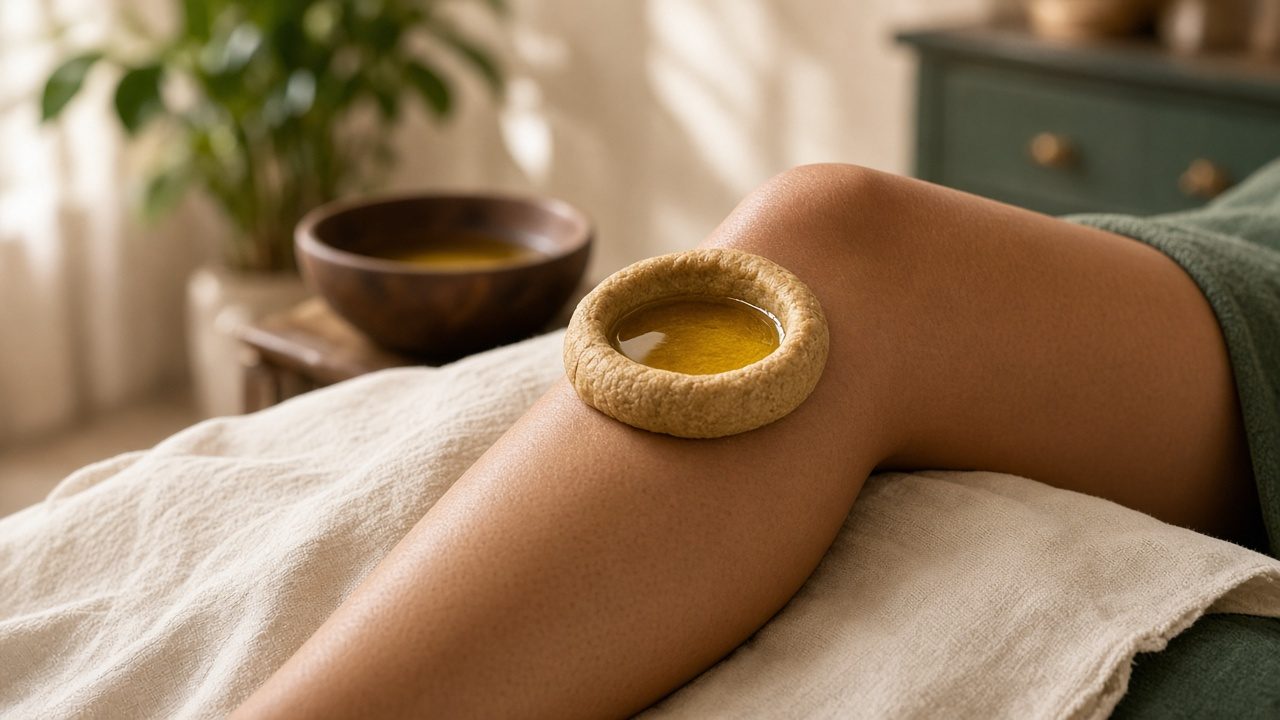
Local Basti is a specialised external Ayurvedic therapy in which warm, medicated oil is retained over a specific region of the body using a specially constructed dough reservoir.
Rooted in India's ancient Ayurvedic tradition, this treatment is designed to provide localised warmth and prolonged contact with Ayurvedic oils.
The Sanskrit word Basti traditionally refers to a container or reservoir. In this treatment, a dough ring is used to hold warm oil over a selected body region for a specific period.
Unlike a conventional massage involving continuous movement, Local Basti is a stationary treatment that focuses on a particular area, such as the lower back, knee, neck or chest.
In traditional Ayurveda, Local Basti is associated with managing Vata-related discomfort and supporting relaxation and physical comfort.
The Traditional Practice of Local Basti
Local Basti involves a carefully controlled procedure performed by a trained practitioner.
-
Preparation of the Treatment Area
The selected body region is cleaned and prepared. A suitable dough is made, traditionally using black gram flour or other appropriate ingredients.
-
Construction of the Dough Reservoir
The dough is shaped into a circular or oval wall and positioned over the selected area. The practitioner checks that the reservoir is secure and capable of holding the oil.
-
Application of Warm Ayurvedic Oil
Appropriately selected medicated Ayurvedic oil is gently poured into the reservoir. Traditional formulations may include Mahanarayana Taila, Sahacharadi Taila or Kottamchukkadi Taila, depending on the treatment approach.
-
Maintaining the Oil Temperature
The oil is maintained at a comfortably warm temperature throughout the session. As it cools, some oil is removed and replaced with fresh, appropriately warmed oil.
-
Completion of the Treatment
After the prescribed duration, the oil is removed, the dough reservoir is carefully lifted and the treatment area is gently cleaned.
The entire procedure requires attention to oil temperature, skin sensitivity and individual comfort to avoid burns or irritation.
The Four Main Types of Local Basti
Local Basti is named according to the body region where the treatment is performed. Four commonly practised varieties are Kati Basti, Janu Basti, Griva Basti and Uro Basti.
Traditional lower back treatment
Kati Basti – Lower Back Oil Therapy
Kati Basti is performed over the lower back, particularly the lumbar and sacral regions.
A specially constructed dough reservoir holds warm Ayurvedic oil over the lower back for a prescribed period.
Traditional Ayurvedic Association: Kati Basti is traditionally associated with Vata-related discomfort and stiffness affecting the lower back.
Potential Wellness Benefits: Helps relax tight lower-back muscles. Provides localised warmth and comfort. May ease everyday muscular tension. Supports relaxation and comfortable movement.
It may be considered as a complementary wellness treatment for people experiencing muscular tightness. It does not repair slipped discs or treat spinal nerve compression.
Traditional knee treatment
Janu Basti – Knee Joint Oil Therapy
Janu Basti involves retaining warm medicated oil over the knee joint using a dough reservoir.
The treatment focuses on providing localised warmth and relaxation around the knee.
Traditional Ayurvedic Association: Janu Basti is traditionally associated with Vata-related discomfort and stiffness affecting the knee region.
Potential Wellness Benefits: Provides soothing warmth around the knee. May help ease feelings of muscular tightness. Encourages relaxation around the joint. Supports comfortable movement as part of a broader wellness routine.
Janu Basti does not replace the natural synovial fluid or regenerate damaged cartilage.
Traditional neck treatment
Griva Basti – Neck and Cervical Region Oil Therapy
Griva Basti is performed over the back of the neck and cervical region.
Warm Ayurvedic oil is retained over the selected area using a specially prepared dough reservoir.
Traditional Ayurvedic Association: This treatment is traditionally associated with Vata-related stiffness and discomfort affecting the neck and upper back.
Potential Wellness Benefits: Helps relax tight neck muscles. Provides localised warmth and comfort. May ease everyday muscular tension. Encourages relaxation after prolonged sitting or screen use.
It should not be considered a treatment for cervical disc disease, compressed nerves or neurological symptoms.
Traditional chest region treatment
Uro Basti / Hrid Basti – Chest Region Oil Therapy
Uro Basti, also known in some traditions as Hrid Basti, involves retaining warm oil over the chest region.
The dough reservoir is positioned over the selected area, and the oil is maintained at a comfortable temperature throughout the procedure.
Traditional Ayurvedic Association: In Ayurvedic philosophy, the chest region is associated with concepts including Avalambaka Kapha and Sadhaka Pitta.
Potential Wellness Benefits: Provides a soothing and relaxing experience. Offers localised warmth to the chest region. May encourage relaxation and a sense of comfort. Can form part of selected traditional Ayurvedic wellness programmes.
Uro Basti is not a treatment for heart disease, palpitations, asthma or other respiratory and cardiovascular conditions. Chest symptoms require appropriate medical evaluation before any massage or heat-based treatment.
Understanding the Ayurvedic Philosophy Behind Local Basti
Local Basti is traditionally connected with the Ayurvedic concept of Vata Dosha.
Vata is associated with movement, dryness and mobility within the body. In traditional Ayurvedic philosophy, an imbalance of Vata may be associated with stiffness, discomfort and dryness.
The application of warm medicated oil is traditionally considered a nourishing approach to managing these qualities.
Local Basti also reflects the Ayurvedic concept of Snehana, which refers to oleation or the application of oil to nourish and soften the body.
The warmth and prolonged contact with oil distinguish Local Basti from ordinary massage.
However, external oil application does not deliver herbal ingredients directly into spinal discs, bones, cartilage or joint fluid.
Key Benefits of Local Basti
Local Basti is traditionally valued for its localised warmth, oil application and relaxing qualities.
- Localised Muscular Relaxation
- The warmth of the oil and the stationary treatment may help relax muscles surrounding the selected body region.
- Supports Physical Comfort
- The treatment may help ease feelings of everyday muscular tightness and stiffness.
- Provides Nourishing Oil Application
- The use of Ayurvedic medicated oils helps moisturise the skin in the treated area.
- Encourages Comfortable Movement
- When combined with appropriate movement and physical activity, Local Basti may form part of a broader wellness routine.
- Promotes Relaxation
- The quiet, stationary nature of the treatment provides an opportunity to rest and experience a soothing wellness session.
Local Basti vs. Full-Body Abhyanga
Although both treatments use Ayurvedic oils, their application and focus are different.
Who May Benefit from Local Basti?
- Relaxation for the lower back.
- Soothing warmth around the knees.
- Comfort for tight neck and upper-back muscles.
- Traditional Ayurvedic oil therapy.
- A localised alternative to full-body massage.
- A relaxing complementary wellness experience.
At LAK.NA.D Ayurveda & Wellness Centre, we aim to bring traditional Ayurvedic therapies into a professional and comfortable wellness environment.
Our Local Basti treatments focus on carefully selected Ayurvedic oils, controlled warmth and attentive therapist care.
Whether you are looking for lower-back relaxation, knee comfort or soothing neck-region oil therapy, discover the traditional practice of Local Basti at LAK.NA.D.